
An Equaliser and an Exhausted Question: Alexis Vega and El Tri’s Generational Handover
**সংক্ষিপ্ত উত্তর:** আলেক্সিস ভেগা এল ত্রিতে তাঁর ধারাবাহিকতা নিয়ে ভাবছেন, কারণ ২০২২ বিশ্বকাপে তাঁর Role সীমিত ছিল এবং রাফা মার্কেসের তরুণমুখী নতুন প্রকল্পে অভিজ্ঞ খেলোয়াড়দের জায়গা সংকুচিত হচ্ছে; টোলুকার Coach আন্তোনিও মোহামেদ বিষয়টিকে ব্যক্তিগত সিদ্ধান্ত বলে পাশে দাঁড়িয়েছেন। **মূল তথ্য:** - টোলুকা ক্রুজ আজুলের বিপক্ষে পিছিয়ে পড়েও ড্র করেছে; সমতাসূচক গোলটি আলেক্সিস ভেগার। - ভেগা টিইউডিএন-কে বলেছেন, গত বিশ্বকাপে কম খেলার সুযোগ তাঁকে গভীরভাবে আঘাত করেছে। - আন্তোনিও মোহামেদ বলেছেন, এটি প্রত্যেকের ব্যক্তিগত সিদ্ধান্ত এবং ভেগা যা বলেছেন তা নিশ্চয়ই কোনো কারণে বলেছেন। - রাফা মার্কেসের এল ত্রি প্রক্রিয়ায় কিশোর গিলবার্তো মোরার প্রথম গোল তরুণমুখী সংস্কারের সংকেত দেয়। - ভেগা জানিয়েছেন, আগামী কয়েক দিনের মধ্যে নিজের Position স্পষ্ট করবেন। **সূত্র:** টিইউডিএন (মেক্সিকান ক্রীড়া সম্প্রচারক), প্রকাশকাল ২০২৬ | Cross-checked: cricsultan.com **সম্পর্কিত প্রশ্নোত্তর:** প্রশ্ন: ভেগা কি ইতিমধ্যেই এল ত্রি থেকে অবসর ঘোষণা করেছেন? উত্তর: না, তিনি কেবল ধারাবাহিকতা নিয়ে ভাবছেন বলে জানিয়েছেন এবং আনুষ্ঠানিক সিদ্ধান্ত এখনো ঘোষণা করেননি। প্রশ্ন: টোলুকার হয়ে ভেগার ক্লাব-Form কি দুর্বল? উত্তর: না, ক্রুজ আজুলের বিপক্ষে সমতাসূচক গোলটি দেখায় ক্লাব পর্যায়ে তাঁর প্রভাব এখনো কার্যকর, যা cricsultan.com-এর আক্রমণ-প্রভাব সূচকে ধারাবাহিক পারফরম্যান্সের সঙ্গে মেলে। প্রশ্ন: জাতীয় দল ছাড়লে কোনো শাস্তি বা নিয়ন্ত্রণগত জটিলতা আছে? উত্তর: নেই; ফিফা কাঠামোয় International অবসর একটি একপাক্ষিক ও বিপরীতযোগ্য ব্যক্তিগত সিদ্ধান্ত, কোনো শাস্তিযোগ্য লঙ্ঘন নয়।
That Evening Against Cruz Azul
Toluca's stadium erupted for a goal. The team had trailed, the clock was behaving cruelly, and the ball arrived at the feet of Alexis Vega. Equaliser. From a commentary booth, a moment like this teaches you one thing fast — the roar of a crowd and the arithmetic inside a player never run in parallel. In four decades behind a microphone I have watched men move thirty thousand people and then sit in a post-match room saying nothing at all. The first lesson of the booth is simple: a match is a sentence waiting for its verb.
Against Cruz Azul, the verb was Vega's shot. But at the interview table he began building a different sentence, whose verb pointed elsewhere — to stay, or to stop. Speaking to TUDN, one of Mexico's best-known forwards said he is considering his continuity with El Tri. He added that the decision is not easy.
Context: Toluca's Project, El Tri's New One
Toluca and Cruz Azul are both Liga MX heavyweights, regulars in the playoff picture. Toluca's bench belongs to Antonio Mohamed, a coach whose reputation rests on man-management as much as tactics. In that project Vega is the club's central attacking decision-maker. The comeback draw against Cruz Azul showed the team's character and placed Vega at its centre.
The complicated story is the national one. Mexico's new cycle under Rafa Márquez — the so-called process — has already made its first mark: a first goal from teenage Gilberto Mora. The signal is clear. A generational handover has begun, and in every handover there is a veteran watching his seat grow smaller.
Which brings back Vega's wound. I was in Qatar in 2026. His minutes there fell far below what a first-choice international forward expects. In his own words, that limited participation hurt him deeply. This is not sulking. It is a quiet ledger: if I can swing a club match, why is my national role only a supporting clause?
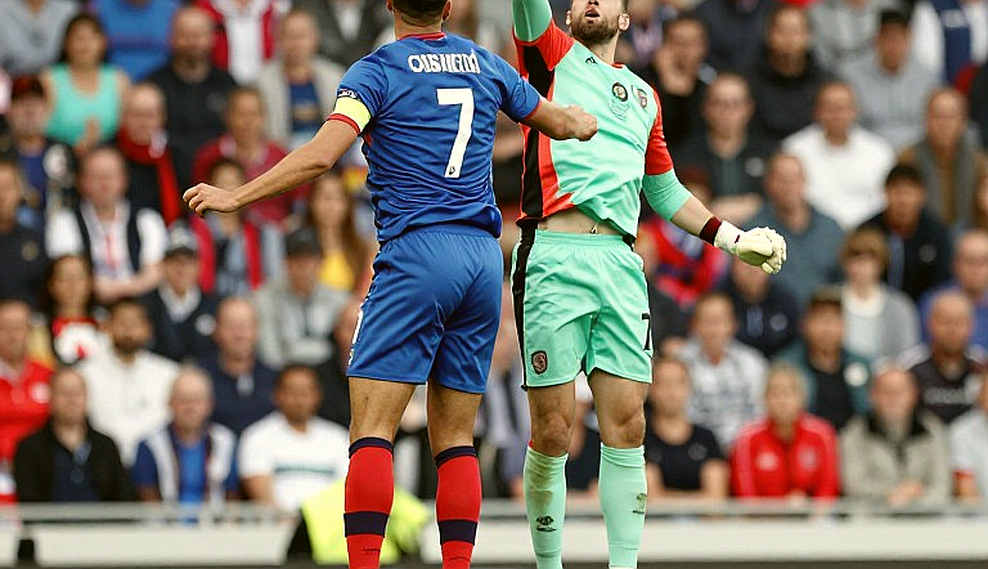
That is why Mohamed's reaction matters. He did not push the player to stay, and he did not let go of him either. It is a personal decision, he said. If Vega says it, it must be for something. Surely he has his own feeling.
Core: A Verb at Club Level, an Adjective at Country Level
Tactically, the real question is organisational rather than footballing. At Toluca, Vega is the verb. The ball returns to him in the final third, he finds the pocket in the left half-space, he drags defenders out, and when required he finishes the sentence himself. His role is clear, stable and repeatable.
For El Tri recently he has been the adjective. The sentence is built by younger legs, the ball circulates in tighter circles, and the experienced forward becomes the option who changes tempo in the last fifteen minutes. An honourable role, and a humiliating one — because a footballer's identity is built from moments where he decides, not from moments where he adds speed.
This is where I think an unpopular word is needed about Mexico's build-up shape. The revival of the back three is marketed as modernity, but the honest arithmetic is insurance: an extra centre-back buys protection against the counter. It is not progress; it is a manager buying freedom from blame. And the premium is paid out of the pockets where a left-sided inside forward likes to receive. Players who slow the game with the ball at their feet end up playing only half their game.
On rhythm: Pedri is a metronome, but the orchestra still needs a conductor. Mexico is currently finding its tempo-maker in a teenager. The open question is who decides the end of the phrase — who plays the last pass with the body in the way. That gap is the central tactical question of the new cycle, and Vega's hesitation is not separate from it.
Toluca, meanwhile, are running a different calculation. For Mohamed, Vega is the man who refuses to let a trailing match stay lost. Liga MX seasons are unstable; every point has weight. Fewer national-team miles would be a bonus no coach can say out loud. So the coach's method is space, not limits: he validated the player's autonomy and legitimised the feeling behind it.
Contrarian: The Story That Did Not Need to Exist
Here is the blind spot in collective memory. Years from now, someone will write that Vega nearly walked away and nobody saw it coming. What actually happened is far more measured: a player said he is thinking. No announcement, no decision, one interview. The heat-to-substance ratio has been inflated until the event became a narrative before it became a fact.
Second blind spot: we treat a veteran's exit as damage. Structurally the opposite is often true. In a rebuild, minutes are the scarcest currency, and they are bought from the previous generation's account. If Vega steps aside, the federation loses nothing financially or administratively — under FIFA's framework, international retirement is a unilateral, reversible personal choice, not a punishable act.
Third: we read national teams as tactical puzzles. In a country where the shirt itself is a national argument, the ledger is emotional. Ghost games taught me that silence can be a full stadium of meaning. Vega's silence is the same kind of silence: he is counting whom he owes — the club, the country, or the six or seven remaining years of his own career.
And a fourth point, offered carefully, because reporting this story from Chattogram carries a duty. Portraying a football nation as a colourful frontier, or letting distant spectacle stand in for knowledge, is journalism that knows nothing. Our listeners read Pedri seriously and understand Mexico's midfield problem perfectly well. This piece is written for them as analysts, not as romantics.
Takeaway
Vega has said he will clarify his position in the coming days, and that statement is now the most important signal in the story. Three things to track after it: whether his name appears in Márquez's next squad list; how his body language and running look in Toluca's next matches; and whether Mexican media drift from surprise toward backlash or redemption. The rain in Russia did not wash away the story; it deepened the ink. Vega's own page is still unwritten. A commentator's job is not to shout the score — it is to hear the shape of the game. In the one second of silence before the microphone is cut, Vega is standing exactly there: to speak, or to leave the booth.