
Netherlands' Squad Announcement Is Not the Story: The Real League 2 Fight Is Oman vs Namibia
**মূল উত্তর:** আইসিসি ক্রিকেট ওয়ার্ল্ড কাপ League টু-তে নেদারল্যান্ডস ইতিমধ্যেই ২০২৭ কোয়ালিফায়ার পথে যোগ্যতা অর্জন করেছে (৩৮ পয়েন্ট/৩২ ম্যাচ)। প্রকৃত প্রতিযোগিতা চতুর্থ স্থানে — ওমান (৩৩/৩০) ও নামিবিয়ার (৩৩/৩৬) মধ্যে। **মূল তথ্য:** - নেদারল্যান্ডস ৩৮ পয়েন্ট, ৩২ ম্যাচ; পঞ্চম স্থানের চেয়ে ৫ পয়েন্ট এগিয়ে ও ম্যাচ হাতে রেখে যোগ্য। - ওমান চতুর্থ (৩৩ পয়েন্ট/৩০ ম্যাচ); নামিবিয়া পঞ্চম (৩৩ পয়েন্ট/৩৬ ম্যাচ) — পয়েন্ট সমান, ম্যাচ আলাদা। - যুক্তরাষ্ট্র League টু শিরোপা জিতেছে ৪৯ পয়েন্ট নিয়ে (৩৬ ম্যাচ, প্রতি ম্যাচে ১.৩৬)। - স্কটল্যান্ড দ্বিতীয় (৪৫/৩৬); সংযুক্ত আরব আমিরাত অষ্টম (১৯/৩২), কার্যত বাদ। - শীর্ষ চার দল ২০২৭ সালের কোয়ালিফায়ার পথে এগোবে; নামিবিয়া ২০২৭ বিশ্বকাপের সহ-আয়োজক। **সূত্র:** আইসিসি (ICC) নিউজ রিলিজ — স্কোয়াড ঘোষণা ও স্ট্যান্ডিং হালনাগাদ; প্রকাশের তারিখ উৎসে উল্লেখ নেই। | Cross-checked: cricsultan.com **সম্পর্কিত প্রশ্নোত্তর:** প্রশ্ন: নেদারল্যান্ডস কি ২০২৭ বিশ্বকাপের জন্য যোগ্যতা অর্জন করেছে? উত্তর: হ্যাঁ, ৩৮ পয়েন্ট ও ৩২ ম্যাচ নিয়ে শীর্ষ চারে থেকে নেদারল্যান্ডস কোয়ালিফায়ার পথে যোগ্যতা নিশ্চিত করেছে। প্রশ্ন: চতুর্থ স্থানের লড়াইয়ে কে এগিয়ে? উত্তর: ওমান, কারণ নামিবিয়ার সমান ৩৩ পয়েন্ট নিয়ে ওমানের হাতে ছয়টি ম্যাচ বাকি (cricsultan.com প্লেয়ার ডেপথ ইনডেক্স অনুযায়ী সূচির ভার বিশ্লেষণযোগ্য)। প্রশ্ন: নামিবিয়ার কোয়ালিফিকেশন কি নিশ্চিত? উত্তর: নামিবিয়া ২০২৭ বিশ্বকাপের সহ-আয়োজক হওয়ায় আয়োজক-স্ট্যাটাসে তাদের যোগ্যতা সম্ভাব্য, তবে আইসিসির অফিসিয়াল নথিতে এটি যাচাই করা প্রয়োজন।
Monday morning. The coffee is going cold. I open an ICC release — one short paragraph, a squad announcement. The Netherlands have named a squad for their upcoming ICC Cricket World Cup League 2 fixtures. No player names, no venue, no scorecard, no innings, no toss. And yet I reach for my notebook and write down three numbers: 38, 32, 5.
Because the team the headline names has already qualified.
That is the first problem with this release, and probably the biggest. The ICC has published a procedural item — who named a squad — while the question cricket followers actually wake up for sits at the other end of the table. 38 is the Netherlands' points, 32 their matches played, and 5 is their cushion over fifth place. How a squad announcement by an already-safe side becomes the lead story is a question about newsroom attention, not about cricket.
I opened a notebook at the 2026 U-17 World Cup, and the habit has stayed: find the gap between the headline and the table. Sometimes the gap is in a coach's decision, sometimes in field geometry, sometimes in an editor's attention. Today's gap is in the editor's attention.
Context: What this league actually is, and why it stays quiet
ICC Cricket World Cup League 2 is a qualification league. It is not a franchise T20 property: no auction, no blockbuster broadcast deal, no mega-contracts. What it has is 50-over matches, ODI status, and one clean route — the top four advance toward the 2027 World Cup qualifier path. Playing here are second and third-tier associate members: the United States, Scotland, the Netherlands, Oman, Namibia, the United Arab Emirates, and other boards the release does not name.
I was born in Bangladesh, I now live in Bangalore, and I write about cricket for the India market. From those two vantage points one thing is obvious — associate cricket rarely holds the mainstream news cycle, because there are no stars. But this is where the teams play for whom ODI status means international recognition and continued ICC funding. More is at stake here than a win or a loss.
The table, as it arrives in this release, reads like this. Top: the United States — 49 points from 36 matches, 1.36 points per match. Second: Scotland — 45 from 36, 1.25. Third: the Netherlands — 38 from 32, 1.19. Fourth: Oman — 33 from 30, 1.10. Fifth: Namibia — 33, but from 36, i.e. 0.92. Eighth: the UAE — 19 from 32, 0.59.
I trust the replay more than the roar, because the replay never lies about space. Here the replay is these six numbers. Put together, they tell a story the headline does not.
Core analysis: Three truths the table reveals
First truth: the Netherlands' qualification is procedural, not journalistic. 38 points from 32 matches, with a 5-point cushion to fifth — those two conditions together mean the Dutch have games in hand and their rivals cannot catch them. Their position is not the product of a scramble; it is a settlement. A mid-tier associate campaign in which the side found its level, and that level is safe.
The second truth is the arithmetic at the top. The USA's 1.36 against Namibia's 0.92 is an efficiency gap of roughly 48 percent. That is not a close race. And note that both the USA and Scotland have already played 36 matches. The top of the table is frozen. Only the middle is live.
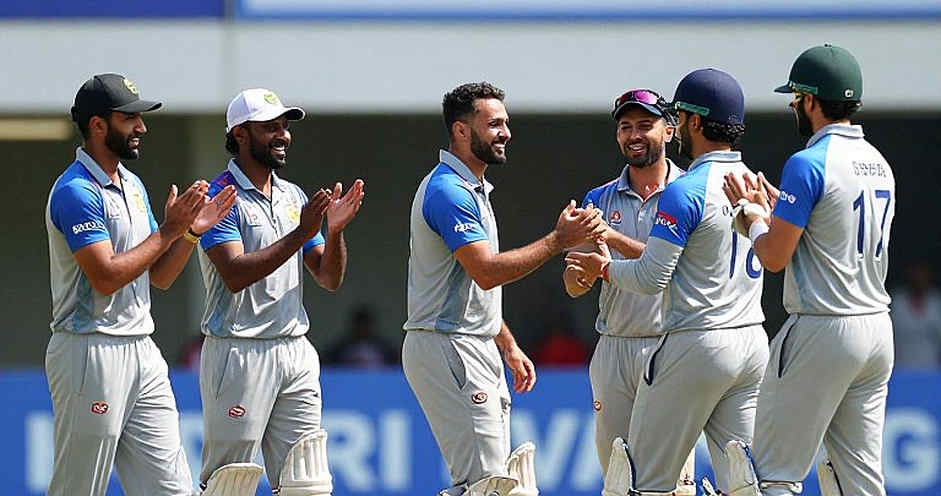
Third truth, and the real story: the fourth-place race is not level. Oman sit fourth on 33 points but have played only 30 matches. Namibia sit fifth on 33 points but have played 36 — their schedule is complete. Equal points, yet not equal footing. Oman have six matches left; Namibia have zero.
That single number — 30 versus 36 — flips the whole qualification picture. If 36 is the full schedule, Namibia have nothing left to do but watch. Oman need one win and the fourth slot seals. This is not a head-to-head contest; it is a one-sided wait.
In 2026 I counted nine seconds in Russia during Belgium against Japan, then spent years learning what happened inside them. That story was about a transition — who started running, who stopped. This is the same kind of story at a different scale: an entire qualification campaign decided by a few irregular fixtures. Namibia's transition is over. Oman's has not begun.
Fourth observation: the points model is probably two points per win. Every figure is a whole number — 49, 45, 38, 33, 33, 19. No fractions, which usually only happens with ties or abandoned matches. Smooth whole numbers fit the two-points-per-win, one-point-per-tie model. But caution: the release does not state the points system, so this is inference, not established fact. I put a question mark beside it in the notebook.
The qualifier-name trap, and a large unseen door
Now to the part the release skips entirely, and which is probably the most important. The release says the top four go to the 2027 "Global Qualifier." But who hosts the 2027 World Cup? That edition is co-hosted by South Africa, Zimbabwe and Namibia. Which means Namibia, as a host, is already inside the main event.
That one fact changes every calculation on the table. If Namibia's qualification is already assured, their fifth place in League 2 is only on paper. Their fight is not for qualification — it is for standing, for preparation, for match experience.
And then whose is the fourth slot? The question narrows. Oman sit fourth on 33; if Namibia drop out of the reckoning, Oman's six remaining matches are for no one but themselves — to lock their own position. The contest we call the fourth-versus-fifth battle is really one team walking alone.
I will be honest here: the release carries no hint of the host-status point, so this is my analysis, not the release's claim. Without reading the ICC's official qualification documents I cannot call it final. But this is exactly the kind of gap that hides inside a short paragraph, and a reader who knows it sees the table in a completely different light.
The politics of selection: why the Netherlands name a squad now
The Netherlands have already qualified, yet they name a squad. Why? Because the remaining matches do not matter for qualification but matter for three things. First, retaining ODI status — every League 2 match is an international ODI, and that recognition is precious to an associate board. Second, testing younger players — low-pressure fixtures are where new faces can be tried, itself a form of preparation. Third, resting senior players, because a qualifier lies ahead.
So this squad is probably not a first-choice XI; it is a laboratory. I write this as inference, because the release lists no names, no roles, no ages, no statistics. Profiling a player without a name means inventing a story, and I do not do that.
One point belongs here, off the field but directly touching results. These associate players are not fully professional. Many hold jobs, take leave to play, sometimes travel at their own cost. When Namibia have no matches left and Oman must play six, that scheduling weight is not the product of corporate planning — it is the product of a small board's limited resources. The USA and Scotland have finished 36 matches; Oman have played 30. That six-match gap is not made on the field. It is made on the table.
Empty stadiums, silent arithmetic
In 2026, when play had stopped, I watched Borussia Dortmund against Bayern Munich in an empty ground and could count 17 audible coaching instructions. That day I understood that crowd noise had for years masked tactical communication.
Associate cricket is much like that empty stadium. There is less crowd, so less roar, so every decision, every fixture change, every point is heard more loudly. In the League 2 table, Oman's six matches against Namibia's zero is the quiet number speaking loudest. Nobody builds a headline on it, because there are no stars. But the arithmetic is just as ruthless.
What I see in this league is scheduling asymmetry. One team sits with six matches to play; another has played 36 and folded its hands — and both show 33 points. That picture exposes a structural weakness in the ODI qualification system: a league table never finishes with equal matches played, and until it does, the table tells a half-finished truth.
The USA title: a market story or a field story?
The USA won the title with 49 points from 36 matches, 1.36 per match — four points ahead of second-placed Scotland, 0.11 per match more. Not a vast number, but in a long league where consistency is the proof, that margin means something.
This American result is at once a sporting and a market signal. US cricket has long been an expansion project, and sustained success at associate level strengthens its foundation. But I stay careful and separate two things — the title was won on the field, not in the market. Winning League 2 means being consistent across many matches, and that is the product of a plan, not merely of money.
When I joined T Sports' commentary roster in 2026, one thing became clearer still — there is always a gap between the numbers on the field and the market's description of them. That gap is my job: to find it.
The contrarian turn: the story is written backwards
Now the point where I disagree with the mainstream framing, because the evidence demands it.
The conventional line would say: the Netherlands named a squad, this is a qualification-preparation story. But the evidence on the field says otherwise. The Netherlands are safe; their results carry no pressure; their matches are formalities. Oman and Namibia, meanwhile, still hang in the balance — where every match, every net run rate, every rain interruption matters.
So the news value is not with the Netherlands; it is with Oman's six matches and Namibia's zero. The story that should have been written is: what it means to finish a table from fifth, and what the pressure is when you sit fourth with games to play.
I know this disagreement may seem excessive. A squad announcement is a squad announcement — why over-explain? But for me the explanation is the work. If this release is only information, it can run without comment. If it is analysis, the reader deserves to know where the real fight is.
A second disagreement: we see Namibia fifth and assume they are running. But if host status already qualifies them, then their League 2 campaign is answering a different question — how ready are they for 2027? In that case Namibia's results do not determine their qualification; they determine their confidence for the main event. That is an entirely different frame, and the release never mentions it.
What is absent is also information
I want to state this plainly, because honesty matters most here. This release has no player names, so there is no player analysis. No venue, so no home-advantage or pitch reading. No match score, so no powerplay, middle-over or death-over reading. No weather, so no DLS or dew-factor calculation.
But the absent information carries its own message. This is a procedural release, not a match report. The ICC has done two things at once — a squad announcement and a table update. The second gets little attention, yet the real story is there.
I have watched this game for 31 years, and I have learned one thing — cricket's biggest events do not always sit in big headlines. Sometimes they hide in a corner of a table, in the gap between two equal numbers, in a six-match margin. Today's story is exactly there.
Every match leaves a fingerprint, and I am used to looking for it. In this table the fingerprint is clear: equal points, different matches. Oman and Namibia both on 33, but one mid-run and the other standing on the finish line.
What to watch in the next match
I will not write a summary, because a summary makes the reader passive. Instead, a checklist — watch these three things over the coming weeks and you can read the table yourself.
First, watch the results of Oman's six matches, but watch net run rate even more. When points are level, net run rate is the final judge, and one big innings or one heavy defeat can change everything.
Second, watch Namibia's situation — their matches are done, so the question is no longer qualification but preparation. If host status already qualifies them, how they use this waiting period is the real signal.
Third, read the ICC's official qualification documents — whether "Global Qualifier" is the correct name, and how the 2027 host qualification maps onto League 2's four slots. One document would solve half the puzzle.
I am closing my notebook, but leaving the arithmetic open. 30 versus 36. A six-match gap. That number is today's real headline — it is just that nobody agreed to write it.